

Dan Brown’s new novel: Origin
The Tuscan Coast has always been an important crossroad for populations and cultures. Beautiful countryside and lovely beaches are marked by archaeological sites, medieval villages, monuments, and museums.
The entire area from the hills to the sea is characterized by important gastronomic and wine traditions. The vines and olive trees have grown here since the Etruscan times. The close proximity to the sea gives the land its character, and the climate is essential to daily life, the local economy, cuisine, and traditions. An important place on the Tuscan coast is the city of Livorno.

Livorno, a cosmopolitan city
Livorno was founded in the second half of the 16th century: the architect Bernardo Buontalenti designed the city by appointment of the Grand Duchy of Tuscany, and it boasts an extensive maritime tradition. This city has always been at the centre of Mediterranean sea routes and its port serves all of Tuscany. Its unique, original history made it an open, welcoming city, a meeting place for religions and various traditions.
Livorno: the main sights
The Venezia quarter, built in the 17th century, is the city’s most fascinating area, and still preserves some of its original features. In the 18th century the wealthiest foreign merchants held residency there. Here lies the Medicean Fossi, a network of navigable canals that (as in Venice) connected not only merchants’ warehouses and homes, but also bars and restaurants central to Livorno’s movida. A boat trip around the Medicean canals is a great way to get to know Livorno from an unusual and fascinating perspective.
The statue of Quattro Mori
The statue by Pietro Tacca is dedicated to Ferdinand I dei Medici and symbolizes victory over piracy in the seas off of Tuscany through its four bronze figures of shackled prisoners.

Fortezza Vecchia
One of Livorno’s most important historic monuments, it is the result of a number of different architectural additions made over the centuries: Matilda’s tower dates back to the 10-11th centuries, a square enclosure jagged called La Quadratura dei Pisani, the circular tower of the 16th century and the real Renaissance fortress in 1521 to a design by Antonio da Sangallo, who isolated it from the dry land. The complex features three great bastions called the Capitana, Ampolletta and Canaviglia bastions. From here the princely residence of Grand Duke Francesco I overlooks the port.
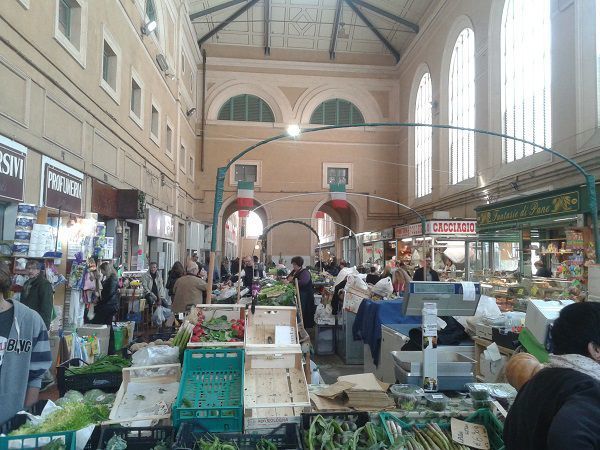
The covered market
An impressive 19th century building constructed with an eclectic architectural taste reveals one of the most important markets for Tuscan wine, freshly caught fish, and local produce.
Livorno, a seaside town
In the city of Livorno everything relates to the sea: the history, the nature, the traditions and cultures, sports, as well as leisure. In the 19th century the first bathing establishments in Europe opened here. Over the last century, Livorno has been home to the prestigious Naval Academy, where officers of the Italian Navy are trained.
You can walk or run along the sea, where the landscape and atmosphere are lovely in summer and winter. A splendid seafront walk runs from the Medicean Port to the cliffs of the Romito, often depicted by the Macchiaioli painters.
The Terrazza Mascagni is another stunning sight: built in travertine, this splendid terrace overlooking the sea offers magnificent views of the Tuscan Archipelago.
Livorno, a city of art and proto-Impressionism
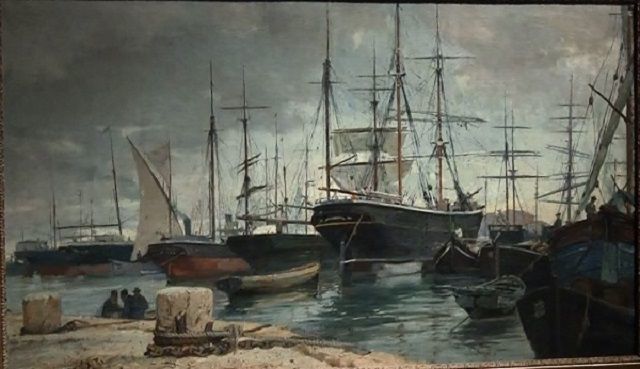
Pietro Mascagni, the composer, Giovanni Fattori, the founder of the Macchiaioli school, the painter Amedeo Modigliani, and the poet Giorgio Caproni were all born in Livorno. The beautiful rooms of the 19th-century Villa Mimbelli contain the Giovanni Fattori Civic Museum. Here visitors can admire the works of Tuscan painters from the 19th and early 20th centuries, as well as magnificent works by the Macchiaioli painters.
The artistic movement Macchiaioli arose at the Cafe Michelangelo in Florence around critic Diego Martelli. Macchiaioli is a great school of painters that included Fattori, Nomellini, Ghiglia, Puccini and Bartolena, and that seeks to reinvigorate the national artistic culture.
The poetic realist of the Macchiaioli is opposed to Romanticism, Neoclassicism, and academic purism, and argues that the image of the real is a contrast of spots of color and chiaroscuro, obtained through a technique called black mirror: by using a blackened mirror smoke can enhance the contrasts of light within the painting.
The art of these painters was to “make the impressions they received from the truth by means of spots of light and dark colors.”In fact, the theories elaborated by Macchiaoli build on the works of the French Impressionists, the theories developed by Macchiaoli paved the way to the Impressionists, who were born later thanks to the frequent visits of our artists in Paris.
Livorno and the gastronomic tradition
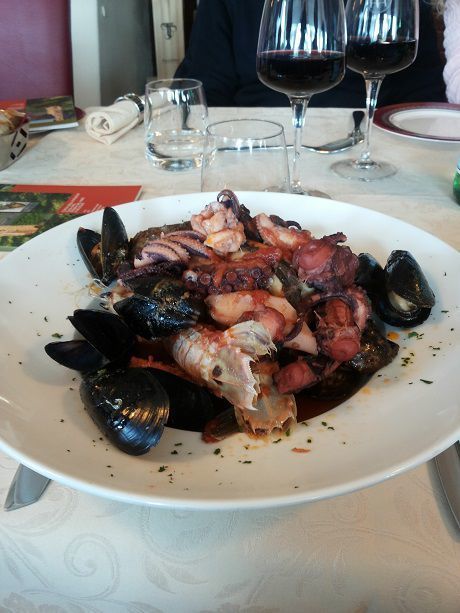
The king of Livorno cuisine is caciucco made with fish, molluscs, tomatoes, and toasted garlic bread. Among these specialties do not miss the cake made of chickpea flour and the ponce alla Livornese, a local version of English punch made with coffee.
Video by www.stilefirenze.it

Related posts


